

The Hedera network is made up of the Governing Council, a set of nodes, and network services for developers to easily communicate with the network. While still in beta we’ve already begun healthy practices to shed light into critical areas like the Council’s meeting minutes and their management of treasury, but have yet to bring this level of transparency to the mainnet itself.
This Monthly Network Report is the first in an ongoing series that shares Hedera’s internal metrics on network operations. Moving forward, if you enjoy this data, we’ll be moving to a social series, so be sure to follow us on Twitter, LinkedIn, or Reddit.
Transactions by Service
Hedera is more than just a cryptocurrency. Although hbar, the network’s native cryptocurrency, allows developers to run their applications and helps secure the network (proof-of-stake), we believe it is critical to be more than just a peer-to-peer payments platform.That’s why Hedera offers four network services: Cryptocurrency, File, Smart Contract, and Consensus.
This chart below visualizes a daily average for each network service for a better understanding of their growth overtime. The most efficient Hedera network services are Cryptocurrency and the Consensus Service and, as such, I expect the delta in their usage over the other network services to continue or perhaps grow.
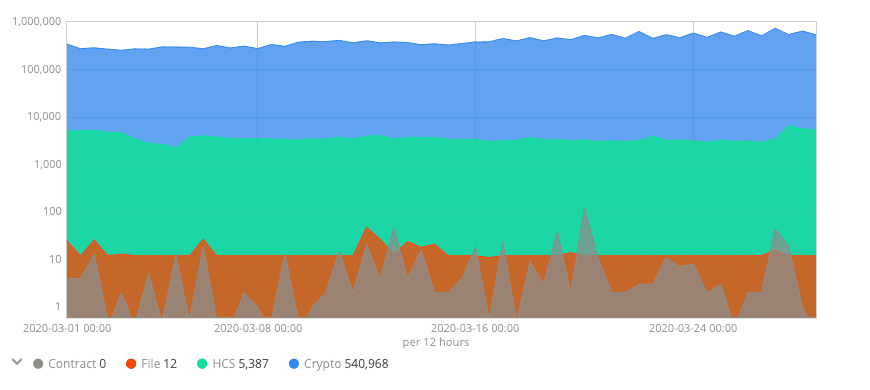
March’s Transactions by Hedera Network Service
Transactions per Second
Hedera provides a faster alternative to blockchain. This is most evident in the consensus latency and throughput. Currently, as the chart below shows, although the network is already doing more volume than ledgers that have been around for years, there is still room for more. In March, the network averaged approximately 15 transactions per second.
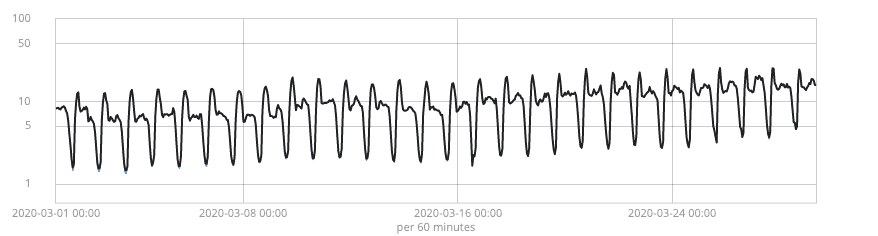
Hedera network transactions per second in March
Consensus Latency
Latency on the Hedera network is defined as the time it takes for a transaction to reach finality after it’s been submitted. Hedera, unlike probabilistic blockchains, uniquely reaches finality within 2 – 5 seconds.
And remember, this is final, there isn’t a need to wait for further block confirmations, you can simply feel confident and go about your day.
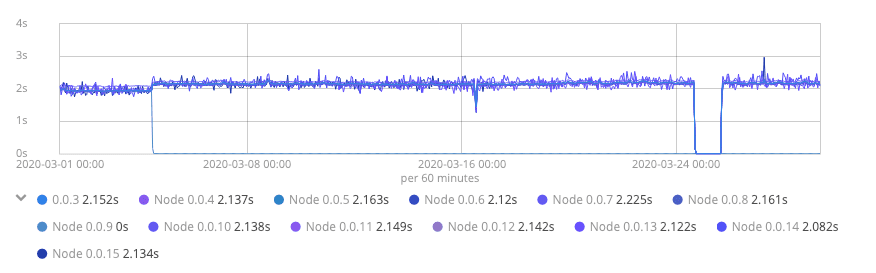
Average consensus latency; drop in metrics due to monitoring outage.
CPU Usage by Node
As mentioned prior, there is still a ton of capacity for transactions – no full ledger or mounting fees here. The currently permissioned Council member nodes are humming along. This chart illustrates the average CPU used by each node aggregated over a 5 minute period.
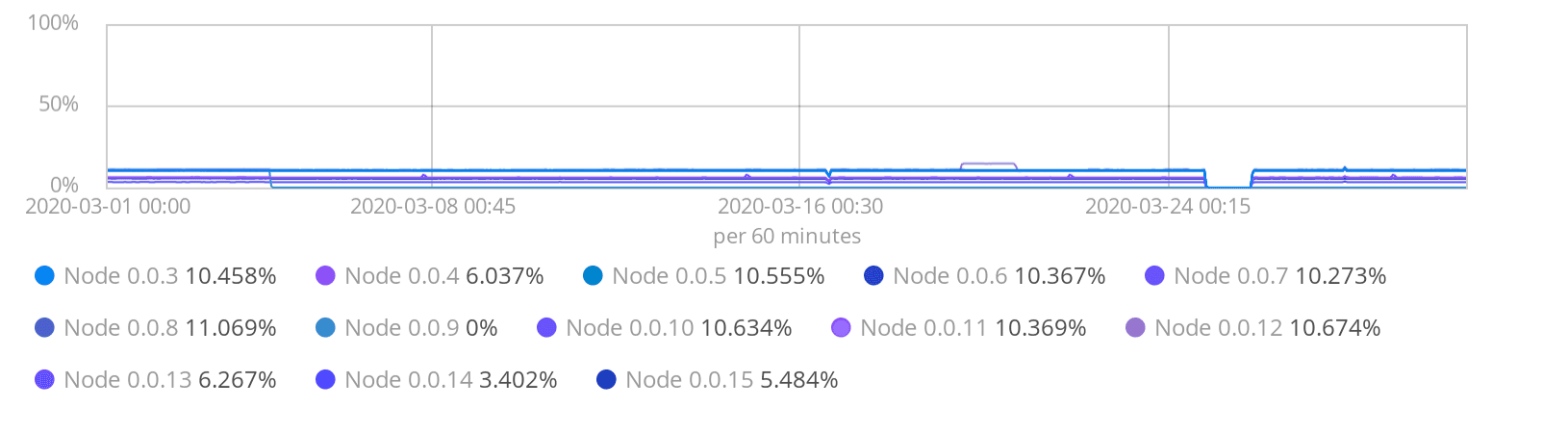
CPU usage by each Hedera network consensus node; drop in metrics due to monitoring outage.
Gossiping
Hedera runs on the consensus algorithm hashgraph. Hashgraph works through two key operations: virtual voting and gossip about gossip. While this chart may not be all that valuable, I like it as it is directly visualizes the core of what makes Hedera great — the efficient gossiping between every node.
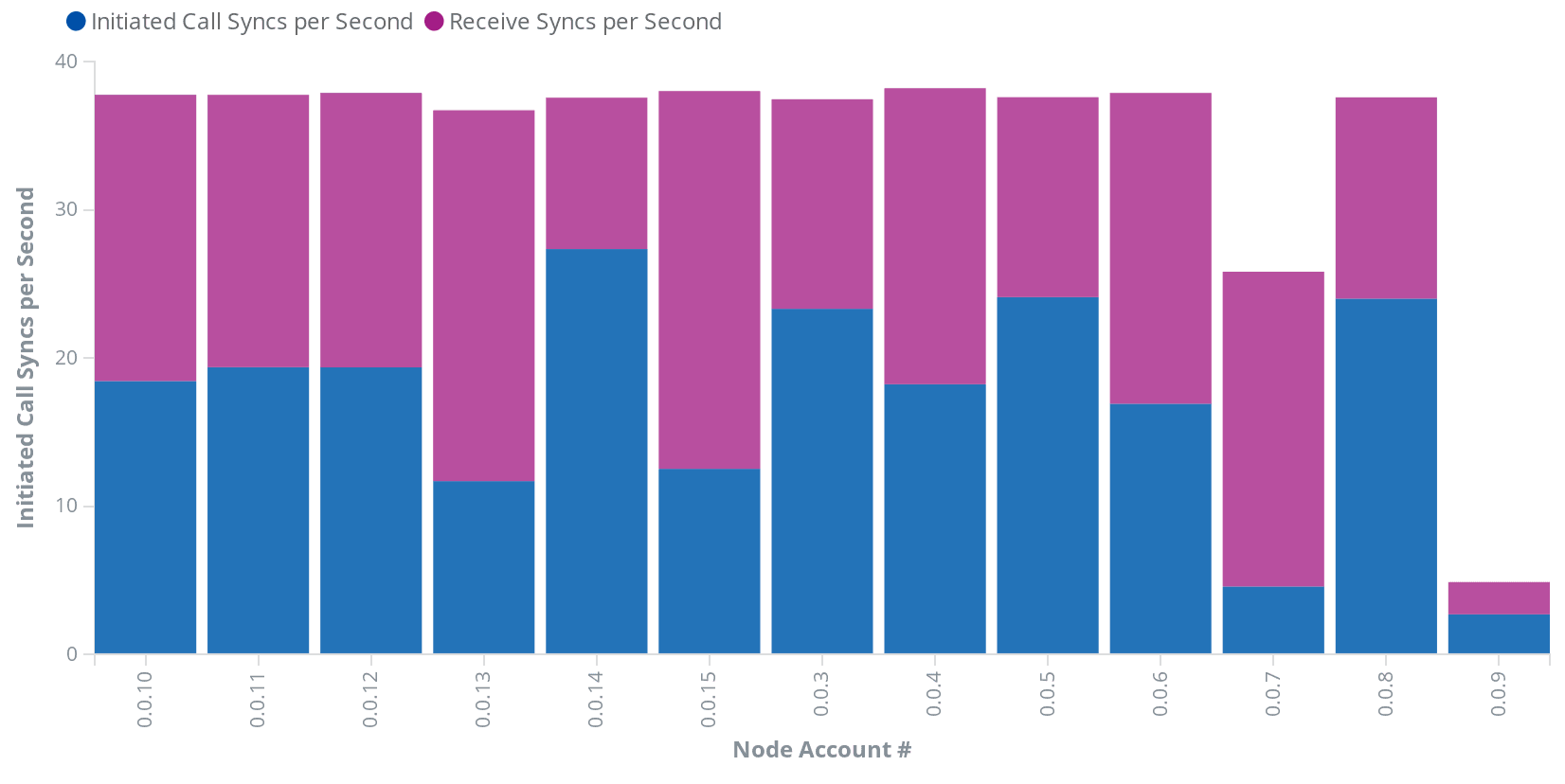
Frequency of node communication
That wraps up our first Monthly Network Report. Let us know what you found interesting and if there’s anything else you’d like us to share. As we post these on a monthly basis, everyone will be able to stay more informed on how the Hedera network is operating.
For immediate status updates on the Hedera network subscribe at status.hedera.com or follow @hederastatus.